
Episode # 69
Expanding STEM Across Ohio
March 25, 2025
About This Episode
On this week’s episode, we are joined by Kelly Gaier Evans, Director of the Ohio STEM Learning Network (OSLN), to discuss the importance of professional development, collaboration, and sustained support for educators to effectively integrate STEM into classrooms.
Guests
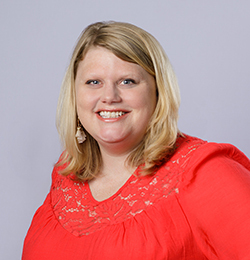
Kelly Gaier Evans
Kelly Gaier Evans works to expand access to quality STEM education across Ohio.
As the Director of the Ohio STEM Learning Network at Battelle since 2021, Kelly has driven a transformative expansion of the network. Last year, 375,000 students in 86 of Ohio’s 88 counties participated in programming driven by the Ohio STEM Learning Network. Under Kelly’s leadership, the network launched the first-ever Ohio STEM Innovation Summit, five new year-long professional development programs, and grants to hundreds of Ohio classrooms.
Transcript
Kara 0:00
Today’s episode is sponsored by Learning Blade. Middle school is the ideal time for career exploration. With Learning Blade, you can easily integrate STEM and career awareness concepts into your classroom. Find out if this resource is free in your state at learning blade.com Thanks, Learning Blade.
Hey.Is this thing on? Are we recording?Can I get a tech person?
Caryn 0:29
Oh, for the love of Ed Tech.
Kara 0:35
Joining me today is Kellie Gaier Evans, Director of the Ohio STEM Learning Network, and I’m excited for this conversation, just because I think that you’ll bring an interesting perspective, too the STEM conversation. So hey, Kellie,
Kelly 0:54
Hi. I’m very excited to be here today and to share about the work the network and everybody associated with the network does across the state.
Kara 1:03
yes, yeah, we’ve been chatting that the network is just great in all of these connections of people doing wonderful things in education. So to start us off, can you just talk a little bit about how you got into education and what led you down that path?
Kelly 1:25
Absolutely, like many people, it’s not a straightforward path. So my degree was in political science. I was very interested in going to law school and pursuing like juvenile court justice. I had done work like internships at prosecutor’s office, and was really, really interested in that. And so I had an attorney friend who recommended, youknow, it would be great to get some experience in schools if that’s the path that you want to go. So after my undergrad, I signed up for Teach for America and clicked anywhere and ended up in the rural Mississippi Delta on the Arkansas side of the river, about a half hour on a dirt road from the Mississippi River.
Kara 2:15
Wow.
Kelly 2:15
Expected it to be very similar to Ohio, very naively thinking. I know rural Ohio, yeah, and clearly went in with many misconceptions, and I think I learned more than than any of my students. Wow, right? Just about America, about the South, about the education system, and just and got hooked, honestly, on education and and the opportunities and the challenges, and stayed, stayed inside education after that.
Kara 2:51
Wow. So how long do you do Teach for America?
Kelly 2:56
It’s a two year commitment. It’s okay. Yeah. Are you at the same school for the full two years, or do they shift you?
for the same Yeah, I was at the same school both both years. And one of the things you know, as I reflect back on the experience, I have things that you know, life lessons, that’s that stay with you, and things that you struggle with, right, like I struggle with, I moved into the community and then left. And one of the challenges right is, how do you keep we know how much community means to students to a school system, right? And so like I look at one of my peers that joined me, who was recruited from the region, right? And she still lives on the other side of the river in Mississippi, but doing work in education, and so,
you know, there were some big, big lessons learned and things that, like, I struggle with, right, moving into a community and then leaving after two years, because that’s not where my community was. There wasn’t a lot to to keep me there, right, but I do very much respect things like, you know, as my kids were getting close to graduating from for those that pursued higher education as they were getting ready to graduate, like my program director reached out and asked for like recommendations of folks that they might be able to recruit to go into education there in the region, right? Because we know that makes a difference.
Kara 4:18
Yeah, oh my gosh. I’m so fascinated, because I have always been curious about Teach across America, but I’ve never known anyone that actually did it,
Kelly 4:29
yeah,
Kara 4:31
yeah, that’s so cool.
Kelly 4:34
Just changes it changes you when you’re in the classroom, right? I think, yeah, perceptions, because everybody experiences the education system. Unlike you know, so everyone has thoughts and feelings and opinions about education because everybody has gone through as a student, right? Yeah,
Kara 4:51
yes, but it’s a lot different when you’re on the other side of things, yes, oh my gosh, that’s so cool. Okay, so. After then, so then, after Teach for America, did you have to, like, do, like, a certification? Since Did you graduate with PolSci?
Kelly 5:11
I did Yeah. So, okay, okay, alongside the program, work through the certification and adding education.
Kara 5:18
Oh, okay, okay, that makes sense. Sorry,
Kelly 5:22
no, no, that’s a good question. It’s while since I thought about it, actually,
Kara 5:26
yeah, no, well, and I’m curious, how do you end up at Battelle?
Kelly 5:31
Yeah, to move back to Ohio, which is where my family is from. I’m from a small rural community in Northwest Ohio, Northwest the north a little a little north of Dayton, but I decided to move back because that’s where my family was and was having conversations with some of my previous like internships, etc, and so I had done in University, had done some interning at the State Senate and at state agencies, so I went and worked for the state’s Department of Higher Education and worked alongside folks doing teacher prep program certification and things along that nature, and learned another lens right From the kind of mixing up the education and policy angle. And I stayed there for a few years, and then felt so disconnected from the classroom, right? So at that point, I had considered, you know, what is my next path? Am I going to go back to the classroom and maybe go into administration? Was what I was having lots of conversations with, you know, different mentors in my life, and one of those mentors offered me a position here at Battelle, on the Battelle education team, looking at different ways. So this would have been like circa 2012 looking for opportunities to increase access to computer science education.And so I said, Yes,network,
and spent, you know, came under different funding, and so worked around college, ready, literacy and math, and eventually was able to secure funding to do more computer science work here, across the network, and really built my understanding around computer science. I taught high school students geometry and algebra, and so as I was building this background, you know, because most people you know, didn’t have access to computer science when I was going through school. And Yeah, unfortunately, there’s still a large group of students that that don’t have access or are not participating in computer science. So I was able to kind of merge my love for education and policy together in that role and do some advocacy work here in the state of Ohio, culminating and leading a state committee for computer science and putting together some recommendations for Ohio and you know, with that work and with some of my other advocacy work in the organization, was asked to then step into the work, to lead the network.
Kara 8:10
What is Battelle’s role in OSLN in and how did the connection begin?
Kelly 8:16
So in 2004 2005 leadership at Battelle was in conversations with leadership at Ohio State University and with Columbus City Schools, trying to find ways to prepare students for the types of careers here at Battelle, Battelle is a science and research organization. We do a lot of contract research for organizations across the world and manage national laboratories for across the country, for the federal government. And so we need to be able to prepare students for careers in science and computer science and engineering, you know, careers that don’t exist today. And so we were looking at, how do we but we’re set up as a nonprofit science and research organization, and as a part of Battelle, founders will education is built in right? How do we do the greatest good for humanity, and including, how do we prepare students right, to be able to be those creators and researchers, and so we were in these conversations and launched Ohio’s very first STEM school, the Metro school here in Columbus. It sets aboutfive minutes from where I’m located right now, actually, I might need to redo my math. We just opened. Metro just opened a new a new building, and they just moved in a few days ago. So it might be a few minutes further from me today, but so that work really launched Battelle’s interest in STEM education, specifically as a core part of our.
Um, philanthropy, honestly. And so a few years later, as the state was looking at, how do we how do we replicate what’s happening at that school across the state, the Ohio STEM learning network was founded as a public, private partnership with the state of Ohio to to replicate systems of school, systems in STEM education. So some of that was like Metro, where it was a kind of school created independently as a brand new school with with school wide stem practices. And some of those schools were existing schools looking to to be, become STEM schools and adopting some of those STEM practices. So that was the founding of the network. And I think often today we still, you know, have folks who think, okay, the the network works on creating those models of STEM and we do still do that. But I think one of the the shifts that has happened over time is as we had more and more models of school wide systems for STEM education, we were able to pull those leaders together and to really begin distilling down What does high quality STEM education look like and create a quality model for the state of Ohio in partnership with the Department of Education and Workforce,
but create that quality model of STEM education. And so now, when we look at the work of the network, our vision is, how do we expand quality STEM education to every community, for for because we know how critical it is for the success of our students, but also Ohio’s economic success.
Kara 11:53
Yeah, oh my gosh, that’s so cool. Why do you think that the connection between Battelle and the OSLN in is important?
Kelly 12:08
Yeah, I would say Battelle serves as the backbone organization of a collective impact model. The network is not Battelle. It’s not the state. It is the it is all of the organizations and the people that are doing the work right? So it’s our K 12 schools across the state of Ohio, those that serve as model STEM schools, and those that are getting started right and excited. It’s the individuals within those schools, the the teachers that are showing you know, are bringing stem practice to their students, are finding ways to bring that authentic learning into the classroom for their kids to to have their you know idea of what they can be expanded to have opportunities to to connect their learning to something that matters to them, something happening inside their community, solving a problem in their community, right? So it’s our teachers, it’s our it’s our school coaches, our instructional coaches, our our principals, all of those educators within the school system that are looking for opportunities to expand access, to STEM inside their classrooms for their students, it’s our industry partners which are connecting with our schools, which are connecting with our state agencies and with other organizations like Battelle, to identify how do we support, how do we how do We translate, you know, the types of skills that kids need to be successful in these future careers to what they’re learning now in the in the classroom, right? It’s our higher education partners. So our network is composed of so many different players, organizations and individuals, and Battelle serves as a backbone organization of that right,
We continue to nurture those relationships, right, to build those partnerships between a school system and community partners, industry partners. How do we spark the interest for partners who aren’t currently at the table right, or don’t know how to engage or spark interest for educators who know this is important, but are looking for how to do this right? So our goal is to make those connections, to bring together those community of practices,right? We believe, you know, in our work as a backbone organization, and working with different state agencies and different other organizations, we’re able to, you know, see what some of those needs are, and try to identify, how do we how do we connect those that are doing that work to to our school?
So that we can begin building that pipeline, right?
So, for example, Ohio excels, is one of the partners. We love learning from right?, and they created a briefing earlier, I guess last year, in 2024 now forecasting the jobs for 2031 and 66% of those jobs require some sort of post secondary education after high school, which is a gap from the number of individuals we’re producing each year, right of 11, right? And so when you start like breaking that down and looking at what are the fastest growing jobs, there STEM is a key component, right? We have AI and machine learning specialists, FinTech, financial technology engineers, data analysts, big data specialists, robotics engineers, and on and on and on. So we know that STEM careers are a huge part of that pipeline. And so when we think about, how do we support Ohio and preparing the myriad of professionals that we need to keep industry here and to continue to expand and to have the entrepreneurs right that are creating new opportunities in their communities.
We believe that that having someone to be the backbone organization. Pulling those people together is important and so so we look at the like a continuum of supports, right from igniting that interest all the way to building and strengthening stem practice within your classroom, within your school. And last year alone, we were able to reach 695 schools, which meant reaching over 375,000 students, and leaving the collective we right the previously talked to, to Sam Crews, who serves as one of our regional hubs. Network includes seven regional hubs, which which are different, all bring us different lenses as well, from university partners serving as hubs to K 12 partners serving as hubs to community partners. And so we get whole bunch of different perspectives too, which bring contribute to that kind of wealth of how do we solve this problem?
Kara 17:22
Teachers, you can now earn contact hours toward grad creditfor listening to the podcast.
Caryn 17:28
Visit for the love of Ed tech.org, for more information.
Kara 17:31
So how is OSLN helping educators adapt to changes in STEM education? Because we do know that over time, it’s evolved and taken different lenses, and the approach has shifted. So,
Kelly 17:49
yeah, well, there’s so many different types of changes too. Yeah. There’s changes when we think about like, what are the STEM workforce needs. There are changes when it comes to the types of modern technologies that are being used. There’s changes in, you know, what we’ve learned about effective strategies around STEM education?
So we we work on, how do we share best practices and lessons learned through communities of practice, through professional learning, through, you know, just different, different types of modalities. And I think maybe it would make sense to share a few examples.
Kara 18:44
Yeah,
Kelly 18:47
one example, right? In the past few years, we’ve all encountered chat, GPT and AI, right? And so that’s just changed dramatically, you know, the future, right? And so we know that foundational computer science knowledge becomes even more important for students, right? Understanding, how does AI work, you know, understanding Big Data, understanding some basics of like, you know, computer science is being able to create a like, here’s what I want the computer to be able to do, and being able to like, record that to create that algorithm that which tells a computer like, here’s, it’s, it’s combining Our idea, right, and computing power to be able to to have a more effective solution, right?
And so OSLN has been working on, how do we support and grow access to computer science, which includes, how do we demystify what it is, right? Because, yeah, the. Is a lot of confusion out there around like, what is computer literacy? What does it mean to be able to use technology versus what is computer science and understanding how
how big data is used in artificial intelligence, how programming is used to create an app, right? And so we’ve been doing a lot of work to advocate to demystify computer science, but also as we can expand interest providing professional learning opportunities at the K-5 level. How do you integrate this into your content area? What does computational thinking look like in K-5 right? How do you connect what you’re already doing in your English classroom, in your math classroom, to computational thinking and computer science? So you’re building kids confidence and under like they’re not growing up with this like,
lack of understanding of how all of the technology surrounding them from the moment they wake up to the moment they go to sleep, works, right? It’s not magic,
Kara 21:09
yeah,
Kelly 21:10
so we work to create opportunities for for our educators to learn how to bring that into the classroom all the way from kindergarten through through high school. We offer various leadership communities of practice, and we’ve worked to bring in,you know, various elements like computer science in there to begin demystifying it and having leaders share best practices. Right? That we’re way. We’re not all recreating the wheel here, but building upon one another. So that’s one example.
Kara 21:46
Okay, which is great, yeah.
Kelly 21:49
We also just launched what I thought served as a great second example.
Jobs Ohio identified that we have a need for approximately like 37,000 advanced manufacturing technicians each year. We’re only graduating a little over, I think it’s somewhere between 3,000 and 4,000 technicians each year from both post secondary degree and technician programs. And so they’re looking at, how do we engage more students? How do we get more students in that pathway. And so one of the things Battelle education is, you know, leveraging is our experience that the network’s experience in convening communities of practice. Right to look at, how do we build a community of practice of schools either strengthening their manufacturing pathways or adding new pathways while connecting to key partners around the state, because each of those partners hold different parts of the solution, right? We know we need to find ways to get more students in the pipeline. How do we spark interest? Right?
What are the different industry credentials that that our industries need, right? And how do we build those into the programs? Right? So that’s one of the we’re just kicking off and excited to do, to solve, solve a problem with the state of Ohio has.
Kara 23:16
yeah, which and man, that I feel like will continue to just grow.
Kelly 23:22
Yeah, yeah, absolutely,
Kara 23:25
yeah. Advanced manufacturing,
I know too, that you do a lot of professional development in your role.
Kelly 23:34
One of the key components are, how are we pulling educators together and supporting them with best practices?
Kara 23:41
Okay, so when it comes to professional development for teachers in STEM What do you think are the most important components to have so that teachers are successful?
Kelly 23:53
Yeah, so we’ve done a lot of work as a Battelle education team.
So Battelle education includes like we manage the Ohio STEM learning network. We also manage a sister network in Tennessee, the Tennessee stem Innovation Network, and a national network STEMx and as a larger Battelle education team, we’ve done a lot of work reading the research around what makes for effective professional development, and looking at where are our current programs, and how do we make sure that they are aligned to these practices, which research,research tells us work, right?
And so we look at all of our programs, and we know that some we’re designing some programs to be those Deep Impact programs, meaning we are taking a community of teachers and or leaders through as a cohort, right? And it’s going to be a year long experience, right? And we know some programs professional development are designed to you.
To be those kind of entry programs, to get them started and excited, but aren’t like you can’t, you can’t take someone that’s not yet excited about STEM education and get them into a year long program. So we’ve looked at all of those elements. And when we’re looking at those deeper impact programs, we’re looking at, how do we embed those throughout the entire program, and some of our early entry programs, we we look at different elements and still based on research practices, but maybe we can’t do the length. So for example, the elements that we focus on, we have eight content focused right? Okay? In STEM education, that means we focus on trans disciplinary curriculum development. How are we teaching content, not in a silo, not teaching math in one room, science in another room, English in another room, right? But really thinking about, how are we integrating that content so kids are learning? How is it applied in the real world, right? Yeah, it’s looking at the engineering design process. How do we encounter a problem and break it down? Take time to to understand what is the problem, asking, do the research and then go through the design cycle of, okay, I’m going to try this. Collect data. Does it work? No, I need to make some modifications, going back maybe to the research phase, right? Making those changes, testing it again, right? So, so things like that, trans discipline, when we’re talking about content focused in STEM education, it’s that trans disciplinary instruction, it’s the engineering design process, it’s project or problem based learning, right? So that’s the first element. Content focused. We also look at how do we incorporate active learning? So engaging the teachers directly in both the designing and trying out of teaching strategies that maybe they’ve not used before, so giving them an opportunity to to learn the same way that we’re asking them to then teach right? We want you to experience it, because you learn in a different way if you’re experiencing it so active learning,
We make sure all of our experiences support collaboration. We want our teachers to build community outside of just whoever’s facilitating the program, to learn from one another, to build a community that they can reach back on, you know, like I’m in the classroom right now, and I met so and so I want to, like, see what she’s doing or he’s doing. By working collaboratively, we know that we can build a community that changed not only what’s happening in my classroom, but what’s happening in the classroom of everybody in that community. So that’s a key component for us.
So I think another key part is offering feedback and reflection, right? So building in time for our teachers to think about their current practice, right, and to receive input and make changes to their practice right, you have to take time to pause and to give that reflection time right?
And then, I think there’s also a key element of sustained duration we don’t learn everything immediately. It takes processing time. You have to have time to practice, to implement, when things go wrong, to have support, right. Nothing goes right the first time. We always have challenges, right? And so you have to, like, I think, in the strongestprofessional development opportunities there. There’s enough of a sustained duration to be able to try and to get feedback and to have that reflection and to have that encouragement and to have that that coaching and feedback as well.
Kara 28:58
Yeah, which are all so important. I mean, like, why is professional development important for the OSLN?
Kelly 29:10
So OSLN focuses on our teachers, professional development for our teachers and our leaders, because we know that is, who is going to change our kids lives, right? Our students lives, working with a teacher and changing the way that they approach education, teaching and learning doesn’t only impact that teacher, it impacts the 30 to 100 kids that they see every day, this year and next year and the following year. And so we focus on we focus on, how do we invest in our educators? Because of that, because they don’t only impact themselves, they impact hundreds of students.
Students, hundreds of students, 1000s of students in their lifetime. That’s very neutral about professional development.
Kara 30:07
I love that.
Well, thank you, Kellie, so much for such a great conversation. And we will have links to the OSLN and and Battelle and stuff that our listeners can find on our website along with this episode. So thank you again.
Kelly 30:28
Thank you. It’s been a pleasure.
Caryn 30:31
Thank you so much for listening to this episode. We hope you found our discussion interesting and insightful. Don’t forget to check out the show notes on our website, where you’ll find more information about today’s guest resources we mentioned, and information on earning contact hours for listening.
Kara 30:46
If you enjoyed this episode, please subscribe. Share it with your network and check us out at fortheloved tech.org
This podcast is produced by SOITA, the Southwestern Ohio Instructional Technology Association, in partnership with ThinkTV and CET, the local PBS stations in Dayton and Cincinnati, until next time, keep exploring new ways to empower your students through tech, and we’ll catch you in the next episode you.
Transcribed by https://otter.ai